
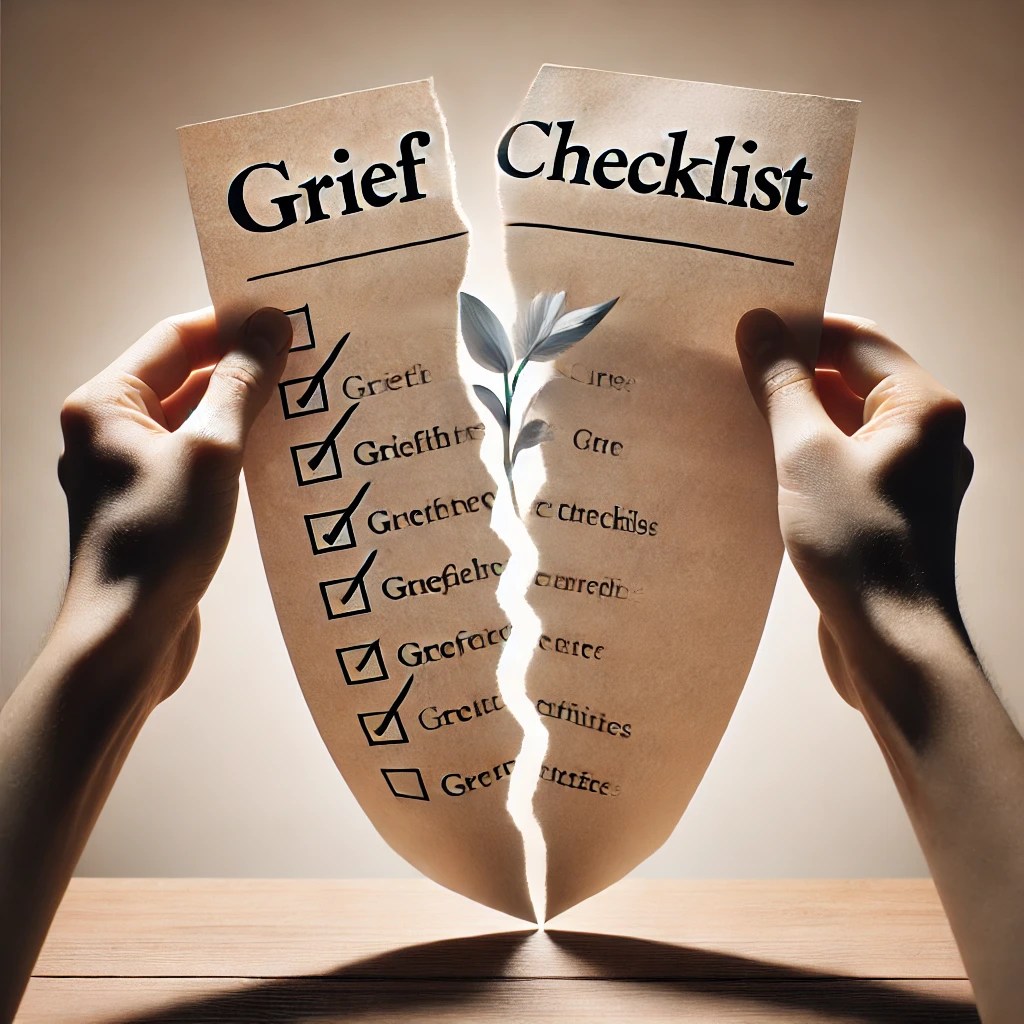
Have you ever felt pressured to check off a mental list of things you’re “supposed” to do while grieving? Maybe it’s clearing out belongings, getting back to routines, or even feeling certain emotions. Grief checklists can seem helpful at first, but they often create unrealistic expectations and unnecessary guilt.
Healing isn’t linear, and it doesn’t follow a step-by-step process. Let’s break down why grief can’t be contained in a checklist and how to approach it with more compassion and flexibility.
The Allure of Grief Checklists
Grief checklists often appeal to us because they offer the illusion of control. In a time when life feels chaotic, it’s tempting to think, If I just follow these steps, I’ll feel better.
But grief isn’t a project to complete or a problem to solve. It’s a process of learning to live with loss. When you treat it like a to-do list, you risk oversimplifying something deeply personal and complex.
Why Checklists Don’t Work for Grief
- Grief Doesn’t Follow a Timeline
- You might feel “okay” one day and completely overwhelmed the next. Checklists don’t account for the unpredictable nature of emotions.
- They Create Unrealistic Expectations
- If you haven’t hit certain milestones—like packing up belongings or returning to social activities—you might feel like you’re falling behind or failing.
- They Ignore Individuality
- Everyone grieves differently. A checklist assumes there’s one “right” way to heal, but that simply isn’t true.
- They Overlook Setbacks
- Healing isn’t a straight path. You’ll have ups and downs, and that’s part of the process. Checklists don’t allow for this natural ebb and flow.
How to Approach Grief Without a Checklist
- Focus on What Feels Right
Instead of following a prescribed list, ask yourself: What do I need today? Some days, it might be rest; other days, it might be connecting with others or taking a small step toward a task. - Acknowledge Progress in Any Form
Progress doesn’t have to be dramatic. Celebrate small wins, like spending time outside, making a phone call, or eating a meal you enjoy. - Allow Yourself to Pause
If a task feels overwhelming, it’s okay to set it aside. Healing isn’t about pushing yourself to do everything at once. - Create Your Own Flexible Rituals
Rituals can be comforting without becoming rigid. For example, lighting a candle, writing in a journal, or talking to a loved one about your memories. - Honor Your Unique Journey
Let go of the need to fit into someone else’s mold. Your grief is yours alone, and there’s no wrong way to navigate it.
Final Thoughts
Grief isn’t a box to check or a task to complete. It’s a deeply personal process that unfolds in its own time and in its own way. By letting go of rigid checklists, you can create space for healing that feels authentic and true to you.
You don’t need a step-by-step plan to heal. You just need to honor where you are today.
With hope and compassion,
Julie

 Navigating Widowhood
Leave a comment