
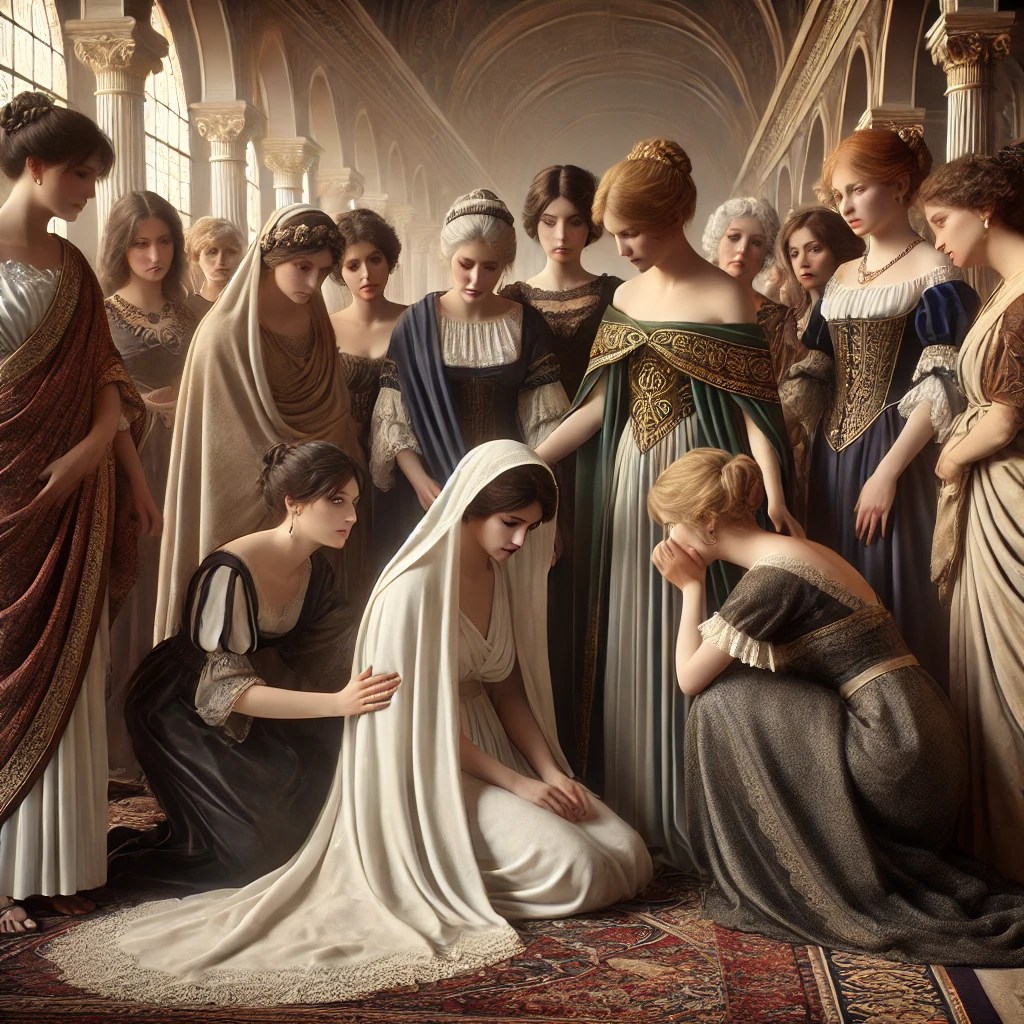
When we think about history, we often focus on kings, queens, and exceptional figures. But what about the everyday people? What was life like for those who lost their spouse or partner?
I have discovered that looking into the past and how hard it was to simply survive helps give me a better perspective of my current circumstances.
As part of our summer series, let’s explore what life was really like for most widows throughout different time periods. Let’s walk in their shoes.

Ancient Egypt: When the Nile’s Bounty Wasn’t Enough
Imagine losing your partner in a land of pyramids and pharaohs. For most widows in Ancient Egypt, life became a daily struggle. A woman’s status was tied to her husbands. Here’s what they faced:
- Poverty: Without a husband’s income, many widows and their children went hungry.
- Hard labor: Grinding grain or cleaning homes became a lifeline for survival.
- Dependence on family: Returning to parents or relying on grown children was often the only option.
While Egypt was more progressive than some ancient cultures in terms of women’s legal rights, these rights often didn’t translate to practical protection for widows. Many turned to small-scale trading or crafts like weaving and brewing, but profits were usually meager.
The Egyptian social structure, while allowing some exceptional women to rise to positions of power, generally left widows vulnerable and struggling to maintain their place in society.
Medieval Europe: Castles and Cottages, but No Fairy Tale Endings
In the shadow of grand castles, common widows faced a world of uncertainty. Their lives were marked by:
- Loss of home: Many had to leave their marital homes, their futures as uncertain as morning mist.
- Pressure to remarry: Society pushed for quick remarriages, often at the cost of personal happiness.
- Limited options: Guilds and trades remained closed, leaving few paths for independence.
Can you feel the weight of their struggles?
The medieval period’s strict social hierarchy and gender roles meant that a woman’s status was largely determined by her relationship to men. While noble widows might retain some property through dower rights, most common widows faced severe economic hardship. The Catholic Church provided some support, but it was often insufficient.
Many widows ended up as servants or relied on charity. The pressure to remarry was as much about economic survival as it was about social norms, reflecting a society where independent women were viewed with suspicion.
Edo Period Japan: Bound by Tradition, Unbound in Spirit
In the land of cherry blossoms and samurai, widows walked a tightrope of tradition and survival. They encountered:
- Social isolation: Expected to live quietly, many widows found themselves alone in a crowded world.
- Economic struggle: Losing access to their husband’s resources left many in dire straits.
- Limited work options: In a society of strict roles, widows had few choices for earning a living.
These bullet points reflect the Confucian principles that governed Edo society. Loyalty to one’s deceased husband was highly valued, but this often came at a great personal cost.
Many widows, particularly those from samurai families, were discouraged or even forbidden from remarrying. This left them in a difficult position, expected to uphold their husband’s memory while struggling to support themselves.
While some found refuge in Buddhist convents, this wasn’t an option for most. The emphasis on family lineage meant that widows without sons were particularly vulnerable, often leading lives marked by financial hardship and social marginalization.
Victorian England: Veils of Mourning, Unveiled Resilience
Imagine a world of strict rules and stiff upper lips. Victorian widows navigated a maze of social expectations and harsh realities:
- Lengthy mourning: Society expected widows to mourn for years, limiting their ability to work or socialize.
- Financial hardship: Many widows, especially in the working class, faced immediate poverty.
- Social stigma: Widows who worked or remarried too soon faced harsh judgment.
These points highlight the tension between social norms and economic realities in Victorian society. The “cult of mourning” imposed strict rules on widows’ behavior and dress, often for years after their husband’s death. While these practices were meant to show respect, they frequently hindered a widow’s ability to support herself.
Working-class widows often ended up in workhouses or relied on charity, while middle-class widows might struggle to maintain appearances despite reduced circumstances. The introduction of life insurance provided some relief, but it wasn’t widespread.
For most Victorian widows, life became a delicate balance between honoring societal expectations of grief and meeting the practical needs of survival.
What Can We Learn From the Past?
As we reflect on the experiences of widows throughout history, from Ancient Egypt to Victorian England, there are valuable lessons that can help the modern widow. These women were faced with overwhelming odds, yet demonstrated that resilience was not just about survival, but about finding ways to adapt and grow in the face of adversity.
Key lessons to remember:
- Adaptability is crucial: Develop diverse skills to navigate life’s changes.
- Community matters: Build and nurture strong support networks.
- Purpose fuels resilience: Find meaning, even in difficult circumstances.
- Economic independence empowers: Strive for financial literacy and self-sufficiency.
- Education opens doors: Never stop learning and growing.
Their stories teach us the importance of adaptability, the power of community support, and the value of finding purpose even in our darkest moments. Challenging social norms can lead to positive change, not just for ourselves but for society as a whole.
The struggles of women throughout history highlights the fact that economic independence creates better outcomes, and the crucial role of education in opening doors and creating opportunities.
Perhaps most importantly, these historical accounts remind us that innovation often springs from necessity, and that our personal challenges can become catalysts for broader social progress.
In the previous blog, we looked at some specific women who were able to harness thier resources, including the amazing Madame Clique.
They show us that balancing tradition with personal needs is a timeless struggle, one that requires both respect for our roots and the courage to forge new paths.
Yes, it is hard to be a widowed person today. Yes, we face a lot of challenges. However, we ALSO have resources, and taking a peek into the past can help us remember how far we’ve come.
Blessings my friends,
Julie

 Navigating Widowhood
Leave a comment